


About Fostering
Spanish Greyhound, Podenco and other Sighthound Rescue
Foster for Project Galgo – Be Part of Their Journey
Foster homes are at the very heart of Project Galgo.
Quite simply, the more foster homes we have, the more dogs we can say YES to.
For a dog leaving a shelter or a difficult past behind, a foster home is so much more than somewhere temporary to stay. It is often their first experience of what it means to feel safe, comfortable and loved within a home.
As a foster carer, you become an incredibly important part of their journey.
You may be the person who teaches them that a sofa is a lovely place to sleep, that household noises aren’t something to fear, that walks can be enjoyable and that human hands can bring affection and kindness. You help them discover routines, build confidence and learn how to navigate family life.
And sometimes, you simply give them the time and space they need to decompress, breathe and begin again.
Why Fostering Matters So Much
Our foster carers don’t just provide a home — they help us truly get to know our dogs.
The observations and updates you give us about your foster dog’s personality, behaviour, likes, dislikes and individual needs are invaluable. They enable us to understand the kind of permanent home in which that dog is most likely to thrive.
You become their advocate, their safe place and their bridge between rescue and their forever home.
And when the day eventually comes to watch your foster dog leave with the family who will love them for the rest of their life, there may well be tears — but there is also the extraordinary knowledge that you helped make that happy ending possible.
Do I Have to Foster Regularly?
Absolutely not.
Some of our foster carers welcome dogs regularly, while others may only be able to foster once, occasionally, or when their circumstances allow.
Every foster placement matters.
Even fostering one dog creates a space elsewhere and can allow us to help another dog waiting in a shelter. One foster home really can change more than one life.
We are also extremely grateful to hear from people who may be able to offer emergency or short-term foster care. Occasionally, circumstances change unexpectedly or a foster placement isn’t the right match, and having a safe temporary home available can be invaluable while we arrange a longer-term solution.
Is Fostering Always Easy?
No — and we believe it is important to be open about that.
Fostering can be enormously rewarding, funny, heartwarming and sometimes completely transformative. But it can also require patience, flexibility, resilience and a willingness to adapt to the individual dog in front of you.
Some dogs settle remarkably quickly. Others need much more time.
Many of the dogs we help have experienced abandonment, neglect or mistreatment. Some have spent years living in shelters, while others may never have lived inside a home before.
A newly arrived dog may not immediately understand house training, stairs, glass doors, televisions, washing machines, traffic or even the simple routines we take for granted. They may be frightened, overwhelmed or unsure of what is expected of them.
They don’t need perfection. They need patience, consistency, kindness and time.
You Won’t Be Doing It Alone
When you foster for Project Galgo, you become part of our team.
We provide our foster carers with guidance and ongoing support, and we’re only ever at the end of the phone when you need us.
We ask foster carers to maintain regular contact with us and provide updates so that we can support both you and your foster dog, offer guidance where needed and build an accurate picture of the dog’s character and needs.
There may be challenges along the way, but we will work through them with you.
Before You Apply
We ask everyone considering fostering to think carefully about whether they can genuinely commit the time, patience and responsibility a rescue dog may need.
This isn’t intended to discourage you — quite the opposite. We want fostering to be a positive experience for you as well as for the dog.
Moving a vulnerable dog unnecessarily can be extremely unsettling, particularly when they are only just beginning to decompress and build trust. We therefore ask prospective foster carers to understand that the first few days or weeks may require additional patience while their dog adjusts.
Give them time. Give them space. Celebrate the tiny victories.
The frightened dog who wouldn’t come near you may one day choose to curl up beside you. The dog who didn’t understand toys may suddenly discover how wonderful they are. The dog who was afraid to walk through your front door may eventually trot through it as though they have always belonged there.
Those moments are what fostering is all about.
Could You Be Their Stepping Stone to Forever?
You don’t have to change the lives of hundreds of dogs.
You can start with one.
Open your home. Give them time. Help them learn what being loved feels like — and when they’re ready, help us send them onwards to the family they’ve been waiting for.
Foster a Project Galgo dog. Be the bridge between their past and their future.
Essential requirements
You don’t need to be an expert to become a Project Galgo foster carer. What matters most is having the time, patience and willingness to help a rescue dog adjust to a completely new way of life.
To foster with Project Galgo, we ask for:
Empathy, patience and understanding. Every dog is different. Some settle quickly, while others need considerably more time to decompress, build confidence and learn to trust. A willingness to let your foster dog progress at their own pace is essential.
A safe and secure home environment. If your property has a garden, the fencing must be appropriate for the individual dog. For many of our dogs, we require fencing of approximately 6 feet, although there are exceptions and every home and dog will be assessed individually.
Someone around for much of the time initially. Newly arrived dogs need time to settle and become comfortable with their new surroundings before gradually learning to spend time alone. We therefore look for foster homes where someone can be around most of the time, particularly during the initial settling-in period.
Flexibility and openness to support and guidance. Fostering is a partnership. We ask our foster carers to communicate regularly with us, be receptive to advice and work alongside the Project Galgo team so that we can provide the best possible support for both you and your foster dog.
Most importantly, you need a willingness to give a dog a chance. You don’t need a perfect home or years of rescue experience. You need kindness, commitment and the patience to help a dog take those first steps towards their new life.
If that sounds like you, we would love to hear from you.
Fostering – Your Questions Answered
Fostering is incredibly rewarding, but we know welcoming a rescue dog into your home can also feel daunting. Below are answers to some of the questions our foster carers most frequently ask.
Remember: when you foster with Project Galgo, you are never doing it alone. We are here to support you throughout your foster dog’s journey.
Can I foster with a view to adopting?
Yes. We offer fostering with a view to adoption where appropriate, primarily for dogs travelling directly from Spain. Dogs already assessed in UK foster are generally available for direct adoption, except in exceptional circumstances.
This gives both you and the dog time to settle and assess whether you are the right long-term match. We normally ask for a decision within approximately three weeks of arrival. If you decide adoption isn’t right, that’s okay—we will begin looking for the dog’s permanent home while they remain safely in foster with you.
Why do these dogs need foster homes?
Many of our Galgos, Podencos, Salukis and other sighthounds have experienced abandonment, neglect, exploitation or abuse. Some have spent months or years in shelters; others may never have lived in a home.
Fostering gives them something a shelter cannot: the opportunity to experience everyday family life in a safe and loving environment.
It also allows us to understand their true personality and needs, helping us find the right forever home.
What expenses does Project Galgo cover?
Project Galgo covers essential fostering costs, including authorised veterinary treatment and care.
We can also provide food, although foster carers who are happy and able to provide this themselves help us enormously by allowing our funds to stretch further.
Any additional expenses, equipment or non-routine purchases must be authorised by Project Galgo in advance. We cannot reimburse costs that have not received prior approval. Approved expenses should be claimed within one month.
How can I help my foster dog find the right home?
Help us get to know them!
We ask foster carers to complete assessments at approximately week one and week three, providing regular updates.
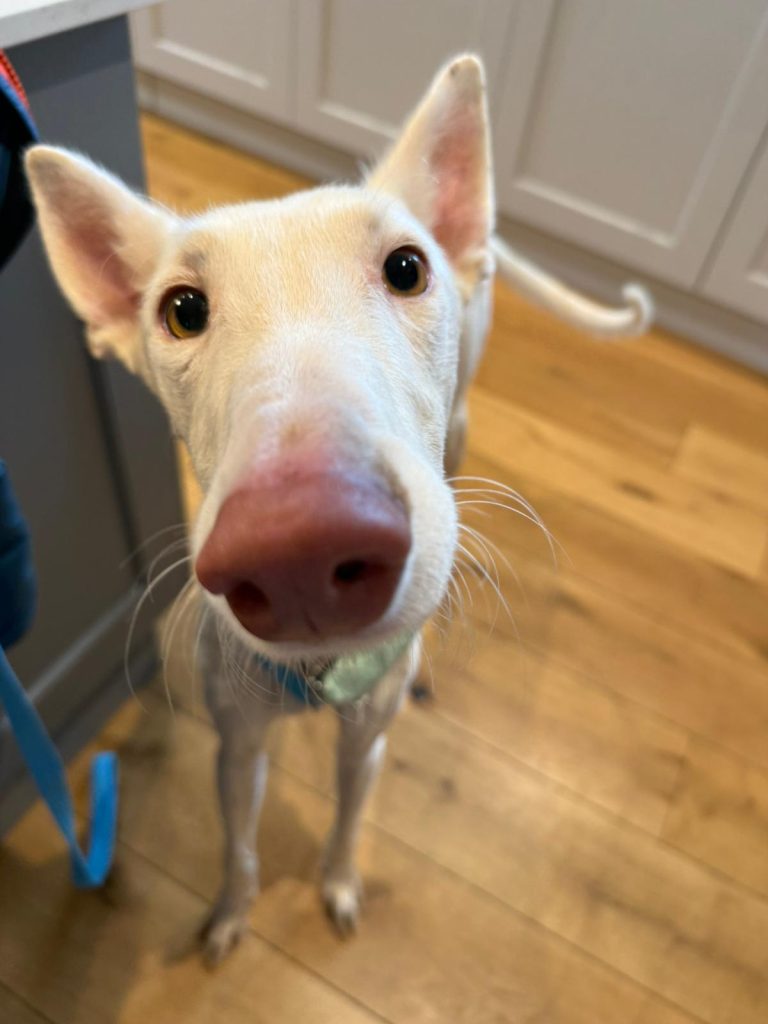
For many potential adopters, a photograph will be their very first introduction to your foster dog. We want our photos to do each dog justice and allow people to see the beautiful individual that you see every day.
Please try to send us a variety of clear, sharp and well-lit photographs, including:
- Clear portraits where the dog’s face and eyes are in focus. Natural daylight is usually best.
- Full-body photographs, ideally taken at the dog’s level rather than looking down from above, so people can appreciate their size, shape and elegant physique.
- Relaxed photographs at home—curled up on the sofa, lounging on their bed or simply looking content. These help potential adopters imagine the dog as part of their own family.
- Outdoor photographs in the garden or on a lovely walk. Natural light and greenery can make wonderful backgrounds.
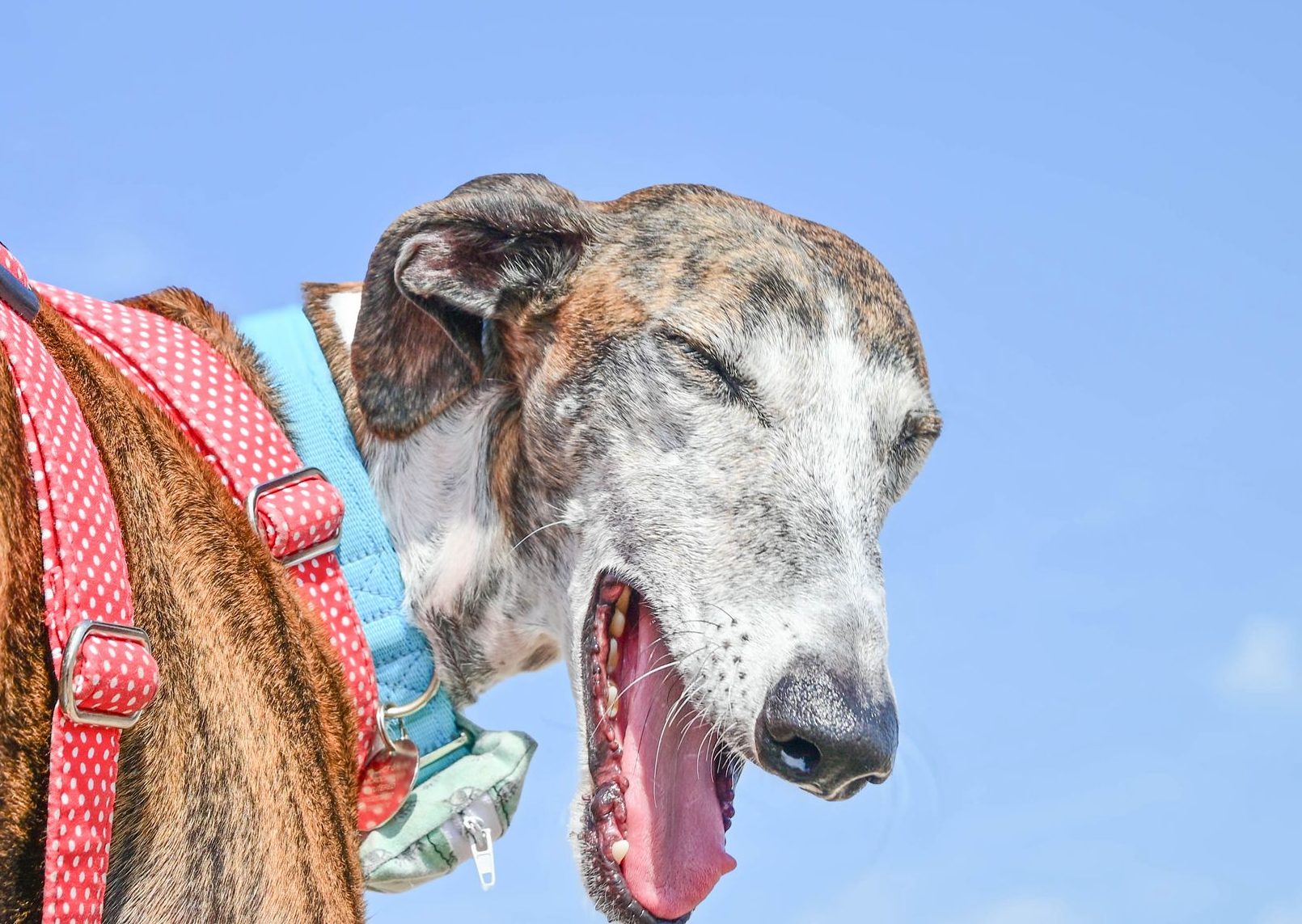
- Personality shots. A silly sleeping position, a favourite toy, a play bow, those enormous ears doing something ridiculous or an expression that perfectly captures who they are—these are often the photographs people remember.
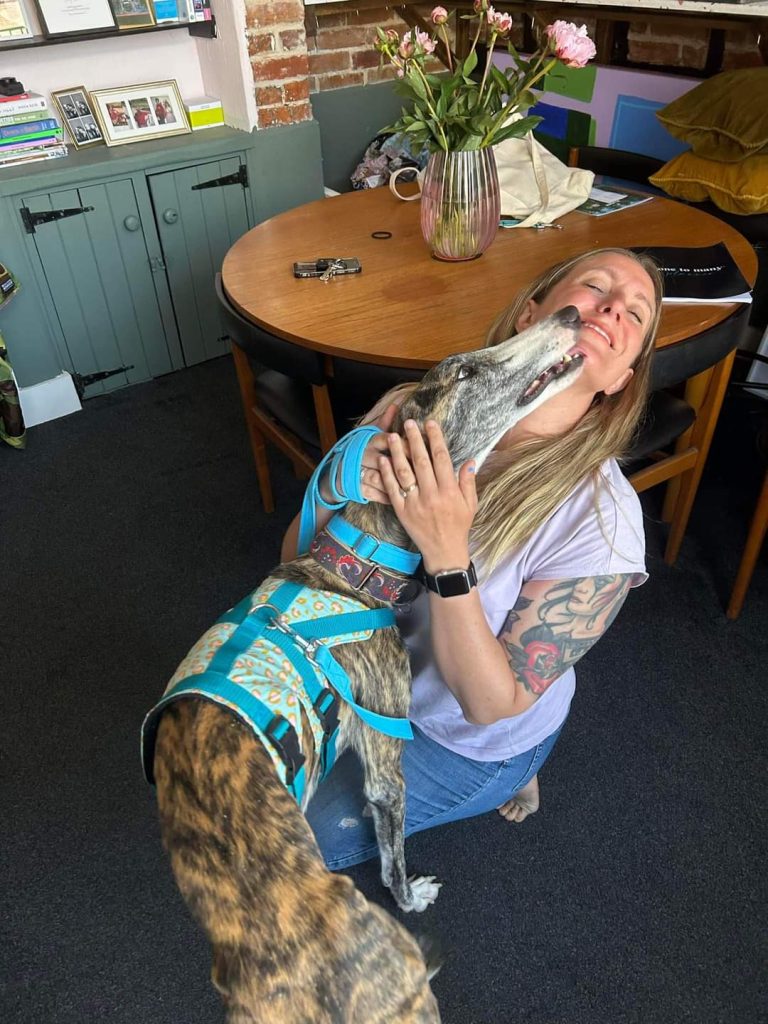
- Photographs showing them enjoying life. If your foster dog loves other dogs, cuddles, exploring, snoozing or playing, try to capture those moments too.
Where possible, get reasonably close and fill the frame with the dog. Photographs taken from a long distance rarely show their face or personality well.
Please avoid sending photographs that are blurred, out of focus, very dark, heavily shadowed or taken from too far away. Try to avoid distracting clutter in the background too. You certainly don’t need a pristine house or professional photography—sometimes simply moving a laundry basket, closing a cupboard door or changing your position can transform a photograph!
Phone cameras are better quality these days and usually up to the job but if not, draft in a friend. Good natural light, a clean lens, a little patience and plenty of treats can work wonders.
And don’t worry if it takes several attempts. Anyone who has tried to photograph a Galgo or Podenco knows that the moment you produce a camera, they can suddenly develop a remarkable talent for looking in precisely the wrong direction or complete evasion.
Videos are also hugely valuable. A short clip of your foster dog walking, playing, interacting with another dog, enjoying affection or simply pottering happily around the home can tell prospective adopters things that photographs sometimes can’t.
You don’t need to make your foster dog look perfect (they already are!)—you just need to help us show them at their best and let their personality shine through.
After all, someone may be scrolling through our available dogs when one photograph makes them stop—and that could be the beginning of your foster dog’s forever
What health screening will my foster dog have received?
Our Galgos and Podencos are tested for Mediterranean and vector-borne diseases using PCR and 4DX testing before travelling from Spain. If a dog tests positive, appropriate treatment will be provided and we will give you all relevant information.
Dogs diagnosed with Leishmaniasis require ongoing medication and monitoring, which we will discuss fully with you.
Our Salukis and other sighthounds from the Middle East are also screened for relevant endemic diseases and treated where necessary.
Where medically appropriate, our dogs are neutered, microchipped, vaccinated, wormed and treated for fleas before travelling.
What happens if my foster dog becomes ill or injured?
Please contact us as soon as possible if you have concerns about your foster dog’s health.
For non-emergency treatment, please speak to us before arranging veterinary care so that it can be authorised.
In a genuine veterinary emergency, your dog’s welfare comes first. Seek urgent veterinary assistance and contact Project Galgo at the earliest opportunity.
What should I expect when my foster dog first arrives?
Your foster dog has experienced an enormous amount of change. Their journey to the UK can be long, tiring, frightening and confusing, followed by arrival in a completely unfamiliar environment.
Some dogs settle remarkably quickly. Others may be frightened, restless, withdrawn or exhausted.
Don’t expect too much too soon.
Keep life quiet and predictable. Introduce resident dogs slowly, remove toys initially and feed dogs separately until you understand how everyone feels around resources.
Keep visitors to a minimum and don’t rush walks, outings or new experiences.
Give them time to decompress, sleep, observe and begin to feel safe. Sometimes the best thing you can do for a newly arrived dog is very little.
Why is the Project Galgo safety kit so important?
Every foster dog has a safety kit consisting of an approved three-point escape-proof harness, house collar with ID tag, lead, Tractive GPS Tracker and tracker pouch.
Our dogs can present a significant flight risk, particularly immediately after arrival.
The safety kit must be used in accordance with our guidance and the GPS Tracker must remain on the dog’s house collar and be kept charged.
For at least the first 48 hours, foster dogs should normally remain in their harness and be taken into the garden on a lead or long line. Some dogs will need these precautions for longer.
A tracker is an additional safeguard—it does not replace careful handling and secure doors, gates and fencing.
What if my foster dog escapes?
Contact Project Galgo immediately. Do not wait.
Even if you believe the dog is nearby or likely to return, tell us straight away. We will guide you and involve specialist dog-recovery support where necessary.
Please follow the advice you are given rather than attempting to chase or catch a frightened dog yourself.
Every minute matters. Our priority is getting them safely home.
What if my foster dog is struggling?
Please tell us. Asking for help does not mean you are failing.
Newly arrived dogs may pace, cry, tremble, bark, toilet indoors, refuse to walk, have upset stomachs, become restless or appear unusually excitable or withdrawn. These can all be signs of stress and overwhelm and are not necessarily representative of the dog they will become.
Keep things calm and predictable and give them time to decompress. We can offer guidance and, where necessary, behavioural support.
If, despite everyone’s best efforts, a placement genuinely isn’t working, we will work with you to find an alternative foster placement as soon as reasonably possible.
What if I have a holiday booked?
We know our foster carers have lives and commitments too!
Please give us as much notice as possible and we will try to arrange approved foster cover.
Some foster families take their foster dogs on UK breaks with them. If you would like to do this, please discuss it with us first so we can make sure the arrangements are suitable and safe.
What happens when someone wants to adopt my foster dog?
When we receive a suitable application, we will complete the applicant’s homecheck and, if successful, arrange for them to speak with you.
Your input and feedback are important.
If both sides are happy, a meeting will be arranged. Applicants with existing dogs will generally be asked to bring them along so introductions can take place.
If everyone feels it is the right match, the adoption can progress. A further meeting can also be arranged where appropriate.
Finding the right home is more important than finding the quickest one.
Is there paperwork involved?
Project Galgo manages the adoption process and provides prospective adopters with the relevant guidance, contract and payment information.
No adoption is complete until Project Galgo has confirmed it in writing and all required agreements, payments and approval requirements have been completed.
Until then, the dog remains in Project Galgo’s foster care and under our responsibility.
What if I want to adopt my foster dog?
You certainly wouldn’t be our first foster fail—and it’s one of our favourite kinds of failure!
If you think your foster dog may already have found their forever home with you, please talk to us.
Where possible, we prefer dogs to have approximately three weeks to settle before a final decision is made, although there can be exceptions. Once adoption is confirmed, the signed adoption agreement and adoption fee are required within 24 hours.
What if I cry when my foster dog leaves?
You probably will.
Saying goodbye to a dog you have nurtured, worried about, laughed at and loved can be incredibly emotional.
But then come the updates. The first photograph on their new sofa. Their first adventure. The message telling you just how loved they are.
And the goodbye starts to make sense.
You were there when they needed someone. You may have witnessed their first relaxed sleep, first tail wag, first play or first tentative request for affection.
You gave them somewhere safe to land, helped them learn to trust and prepared them for the family who will love them forever.
That’s what fostering is all about.
Our foster homes give our dogs safety, hope and a stepping stone to forever. Without them, Project Galgo simply couldn’t do what we do.

Project Galgo Fostering Form
Project Galgo fostering sponsored by
